

Family & Heirs
Technology for Aging Parents: How Smart Tools Can Help Loved Ones Live Safely and Independently at Home
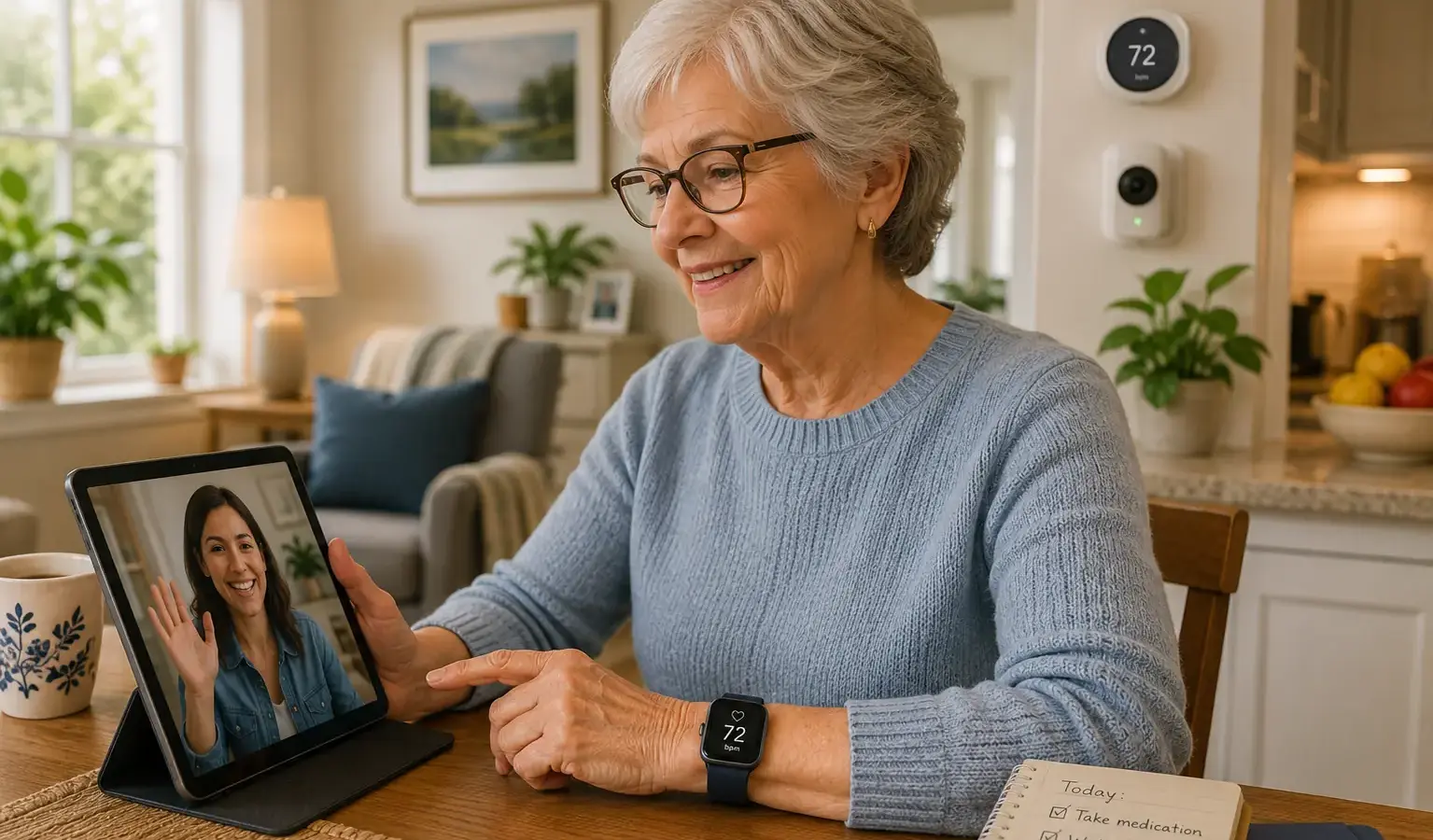
Technology for aging parents can provide an extra layer of safety and support for older adults who want to remain independent at home. For many people, growing older at home represents independence, familiarity, privacy, and connection to the community they’ve built over the years.
For adult children, however, an aging parent living independently can create a different set of emotions. Is Mom taking her medication? What happens if Dad falls? How would I know if something changed? What if I live several hours—or several states—away?
Technology is beginning to help bridge that gap.
From medical alert systems and fall monitors to GPS-enabled wearables, medication reminders, smart-home devices, and health monitoring, families have more ways to support an aging parent without necessarily taking away their independence.
The goal shouldn’t be to monitor every moment of a parent’s life. The goal is to use technology thoughtfully to provide support when it’s needed while allowing an aging parent to continue living life on their own terms.
How Technology for Aging Parents Is Changing Family Care
A recent example of where this technology is heading comes from Fitbit co-founders James Park and Eric Friedman.
Their company, Luffu, recently announced Luffu Link, an LTE-enabled health and safety wearable designed around family caregiving. According to TechCrunch, the screenless band combines health and wellness sensing, voice logging, GPS location awareness, family check-ins, and the ability to request help from trusted contacts without having a phone nearby.
The device can track information such as activity, sleep, resting heart rate, heart-rate variability and breathing rate. A wearer can also record a voice update about a medication, symptom, meal or mood, and the accompanying system organizes that information for the family.
Perhaps more interesting than any individual feature is the philosophy behind it: How can technology help families stay connected without making an older parent feel constantly watched?
Luffu Link is a newly announced product and is expected to begin shipping in early 2027, so it is an example of where this market is going rather than a recommendation for a particular device.
The larger trend is what matters.
Technology designed specifically around aging, caregiving and independence is becoming increasingly sophisticated.
Technology That Helps Aging Parents Stay Independent
There isn’t one device that solves every problem. Different technologies address different needs, and the right combination depends on the individual.
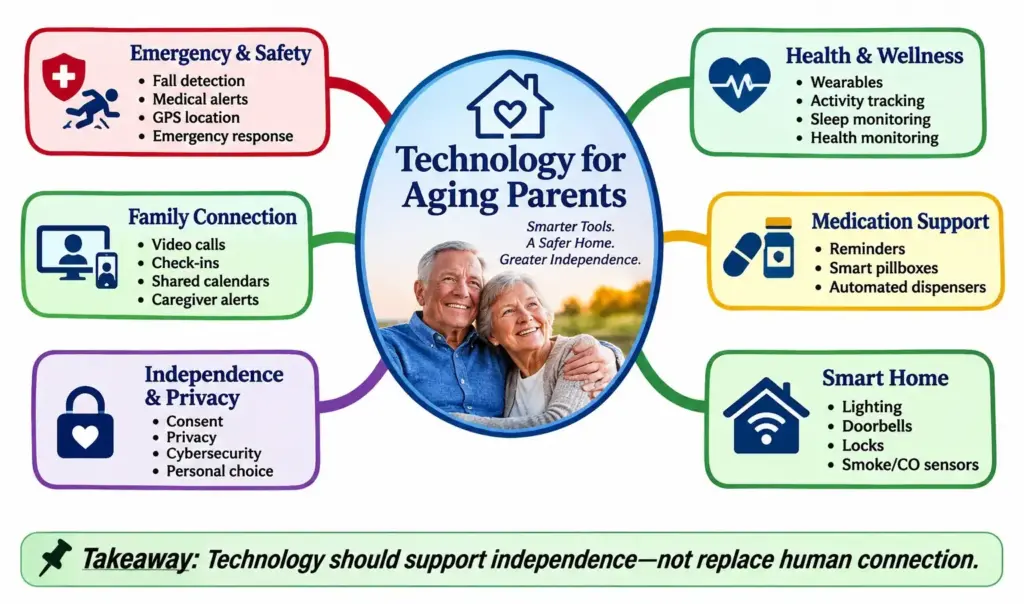
Medical Alert and Emergency Response Systems
Medical alert devices have been around for years, but today’s systems offer far more than a button hanging around someone’s neck.
Depending on the system, features may include:
- Emergency call buttons
- Automatic fall detection
- GPS location
- Two-way communication
- Family notifications
- Cellular connectivity outside the home
The National Institute on Aging specifically identifies emergency medical alert systems, fall monitors and GPS tracking devices as technologies that may help reduce certain risks for an older person living alone.
These systems can be particularly useful when someone has mobility concerns or lives alone for significant periods of time.
However, they only work when they are properly set up, charged and actually worn.
Wearable Health and Safety Technology
Smartwatches and newer screenless wearables can potentially provide another layer of information.
Depending on the device, a wearable may track:
- Activity
- Heart rate
- Sleep patterns
- Falls
- Location
- Changes in daily routines
Some emerging systems are moving beyond simply collecting numbers. They are designed to identify changes in patterns that might deserve attention.
For example, an unusual decline in activity or a significant change in sleep doesn’t necessarily mean something is wrong. But it could provide a reason for a family member to check in.
Technology shouldn’t diagnose a medical problem. It can, however, sometimes provide information that helps families recognize when a conversation may be appropriate.
Smart-Home Technology for Aging Parents
Not all aging technology needs to be worn.
A thoughtfully equipped home can quietly provide additional safety and convenience.
Smart Lighting and Motion Sensors
Poor lighting can contribute to falls, particularly around stairs, hallways and bathrooms.
Motion-activated lighting can illuminate frequently traveled areas automatically, reducing the need to search for a switch in the dark.
The National Institute on Aging recommends good lighting—particularly around stairs—as part of making a home safer for aging in place.
Smart Doorbells, Locks and Cameras
Video doorbells and smart locks can help older homeowners identify visitors before opening the door and allow trusted family members to assist with access when appropriate.
Used with the homeowner’s knowledge and consent, these tools may provide additional security without changing the way someone lives inside the home.
Smoke, Carbon Monoxide and Other Smart Sensors
Connected smoke and carbon monoxide detectors can provide alerts locally while some systems can also notify family members remotely.
Other sensors may help identify unusual activity within the home.
These technologies can be useful, but they shouldn’t create a false sense of security. Batteries, internet connections and equipment can fail, so basic home-safety practices remain essential.
Medication Technology for Older Adults
Medication schedules can become surprisingly complicated.
An older adult may have several prescriptions taken at different times, with different instructions.
Technology may help through:
- Smartphone reminders
- Automated pill dispensers
- Smart pillboxes
- Refill reminders
- Family notifications
- Medication tracking apps
The best system is not necessarily the most technologically advanced one.
It’s the one the person will actually use.
A simple reminder that works every day may be far more valuable than an elaborate system that frustrates the user.
How Technology for Aging Parents Helps Long-Distance Caregivers
Caring for a parent is challenging enough when you live nearby.
When families live in different cities or states, even simple questions can become stressful.
Did Mom get home from her appointment?
Did Dad remember his medication?
Why hasn’t he answered the phone?
Technology can provide another layer of connection between visits.
A quick digital check-in, shared calendar, medication reminder, location feature or emergency notification can help families remain involved without requiring repeated phone calls throughout the day.
This can be particularly valuable when several siblings share caregiving responsibilities.
But There Is a Fine Line Between Helping and Monitoring
Technology creates an important question:
When does caregiving become surveillance?
An aging parent is still an adult.
Being older does not mean giving up privacy or control.
Before installing cameras, GPS tracking, health monitoring or activity sensors, families should have an open conversation about:
- What information will be collected?
- Who will have access to it?
- When should someone receive an alert?
- What does the parent want help with?
- What feels intrusive?
- Who controls the account and passwords?
Unless someone’s cognitive or legal circumstances require a different arrangement, technology should ideally be something families implement with an aging parent rather than for them.
Don’t Forget About Privacy and Cybersecurity
Connected devices collect information, and some of that information can be highly personal.
Before choosing a device or service, families should consider:
- What data does the company collect?
- Where is the information stored?
- Who can see it?
- Can information be shared with third parties?
- Does the account support strong passwords or multi-factor authentication?
- What happens to the data if you cancel the service?
- Is there a monthly subscription?
This becomes particularly important with devices collecting health information, location data or information about daily routines.
Convenience shouldn’t come at the expense of unnecessary loss of privacy.
Technology for Aging Parents Cannot Replace Human Connection
This may be the most important point in the entire discussion.
Technology is a tool.
It isn’t a caregiver, a family member, a neighbor or a friend.
The National Institute on Aging specifically cautions that emergency medical alert systems cannot replace regular check-ins from family, friends and caregivers.
A wearable might tell you that Mom hasn’t moved much today.
It can’t sit down and have coffee with her.
A sensor might tell you that Dad hasn’t opened the refrigerator.
It can’t ask whether he’s feeling lonely.
Technology works best when it strengthens human connection rather than replacing it.
Create a Human Check-In Plan Too
Families don’t need sophisticated technology to create a safety net.
Sometimes a simple routine is incredibly effective.
For example:
- A daughter calls every morning.
- A neighbor checks in if the blinds haven’t opened by a certain time.
- A sibling handles medical appointments.
- A grandchild checks in by text in the evening.
- Friends have an agreement to contact each other daily.
For an older adult who doesn’t like technology, these arrangements may be preferable to an app or wearable.
And even when technology is used, a human check-in plan remains valuable.
Planning Ahead Makes Aging in Place Easier
One of the strongest recommendations from the National Institute on Aging is also one of the simplest:
Plan for aging in place before significant care is needed.
Waiting until after a fall, hospitalization or other emergency can force families to make important decisions quickly. Building financial flexibility before you need it can also give you more choices as your needs change in retirement.
Planning earlier gives everyone time to discuss:
- Home modifications
- Technology
- Transportation
- Healthcare
- Caregiving responsibilities
- Emergency contacts
- Financial resources
- Long-term housing preferences
It also gives the aging parent the opportunity to participate fully in those decisions.
Technology Is Only One Part of an Aging-in-Place Plan
A successful aging-in-place strategy goes beyond gadgets.
The home itself may eventually need changes such as:
- Grab bars
- Improved lighting
- Nonslip flooring
- Walk-in or accessible showers
- Handrails
- Ramps
- Wider doorways
- Stair lifts
The National Institute on Aging recommends addressing common hazards such as loose rugs, inadequate lighting and unsafe bathroom surfaces as part of creating a safer home.
These changes can range from inexpensive improvements to substantial renovations.
That means aging in place is not only a healthcare conversation. It is also a retirement planning conversation.
How Do You Pay for Aging in Place?
Technology subscriptions, home modifications, in-home assistance and eventually long-term care can create expenses that weren’t part of the original retirement budget.
This is where financial planning becomes important.
Depending on the homeowner’s circumstances, resources might include:
- Retirement income
- Savings
- Investments
- Long-term care insurance
- Family assistance
- Home equity
For homeowners who have accumulated substantial equity, the home itself may become part of the financial strategy.
Depending on age, goals, finances and the amount of equity available, options could include a traditional HELOC, a retirement-focused HELOC, a reverse mortgage, downsizing, or other home-equity strategies.
There is no single solution that is right for every family.
The important step is to explore the options before a financial or healthcare emergency limits the choices available.
Key Takeaways
Technology is creating new ways for families to support aging parents while respecting their desire for independence.
Wearables, medical alert systems, smart-home technology, medication tools and remote check-ins can all play a role.
But technology works best as part of a broader plan that includes:
- A safe and accessible home
- Regular human contact
- Family communication
- Healthcare planning
- Financial preparation
- Respect for the older adult’s privacy and independence
The objective isn’t to watch an aging parent more closely.
It’s to give them the support and confidence to remain independent for as long as safely possible.
Frequently Asked Questions About Technology for Aging Parents
What technology can help an elderly parent living alone?
Depending on the person’s needs, useful technology may include a medical alert system, fall detector, GPS-enabled wearable, smart lighting, medication reminders, video doorbell, smart smoke detectors and communication or family check-in tools.
Can technology help an aging parent stay at home longer?
Technology can support aging in place by improving communication, identifying certain safety concerns and making everyday activities easier. It should be combined with appropriate home modifications, healthcare, human support and financial planning.
What is the best medical alert system for an aging parent?
There isn’t one system that’s best for everyone. Consider the parent’s mobility, lifestyle, comfort with technology, whether they leave home independently, cellular coverage, fall-detection needs, monthly costs and whether they will consistently wear or use the device.
Should I use GPS tracking for an elderly parent?
GPS can be valuable in some circumstances, particularly when getting lost or becoming disoriented is a concern. Whenever possible, discuss location sharing openly with your parent and agree on when and how the information will be used.
Can technology replace regular caregiver check-ins?
No. Technology can provide useful information and emergency assistance, but it cannot replace regular contact with family, friends, neighbors or professional caregivers.
How should families prepare financially for aging in place?
Start early by estimating potential costs for home modifications, technology, transportation, in-home assistance and future care. For homeowners, it may also be worthwhile to understand how home equity could fit into a broader retirement and aging-in-place plan.
Conclusion: Technology Should Support Independence, Not Replace It
The future of technology for aging parents isn’t about filling a home with gadgets or monitoring every moment. It’s about using the right tools at the right time to support safety, independence, and connection.
It’s about using the right tools at the right time to help people maintain independence, safety and connection.
The newest generation of health and safety wearables shows how quickly this field is evolving. But sometimes the best solution will still be remarkably simple: a safer bathroom, better lighting, a neighbor with a spare key, or a phone call every morning.
The best aging-in-place plan combines technology with something technology can’t provide—people who care and a plan made before it’s urgently needed.
If you or your family are beginning to think about the financial side of aging in place, understanding your available resources—including your home equity—can be an important part of that conversation. Exploring those options early doesn’t mean you have to use them; it simply gives you more choices if your needs change later.
Have questions about this?
Talk to a Certified Reverse Mortgage Professional — directly.
When you call, you reach me — not a call center. Free 30-minute consult by phone, video, or in person. No SSN, no credit pull, no obligation.
Schedule a consult