

hecm for purchase
HECM for Purchase: How to Evaluate This Home-Buying Option

The purchase decision is about funding the new home
An HECM for Purchase is a way to evaluate buying a new home with part of the purchase financed through a reverse mortgage rather than paying entirely with cash or using a conventional mortgage that requires monthly principal-and-interest payments. That description gives you the starting point, not a personal conclusion.
The useful question is not simply whether this type of loan exists. It is how the proposed purchase would work for you from four angles:
- What money would come from your available cash?
- What part of the purchase would be financed through the reverse mortgage?
- Which homeowner responsibilities would continue after closing?
- How could the growing loan balance and later repayment event affect your home equity?
Those questions belong together. A payment structure can look manageable while the required cash contribution, property obligations, costs, or future balance changes the overall decision. A lower need for monthly principal-and-interest payments does not remove the need to maintain the home, pay required property charges, and use the home as your principal residence.
This guide follows the decision in that order. First, identify the product and map the purchase funding. Then separate the cash question from the loan question, compare the available routes without ranking them, and examine ownership, ongoing duties, costs, equity, occupancy, and repayment. The final section turns those points into questions for a personal discussion.
An HECM for Purchase may be worth investigating when the purchase goal, available cash, home, occupancy plan, and preferred payment structure can be examined together. A general explanation cannot determine your eligibility, available proceeds, required funds, or individual suitability.
Name the purchase-focused HECM before comparing the paths
The purchase-focused HECM option uses a reverse mortgage when buying a new home. The purchase approach described by the National Reverse Mortgage Lenders Association involves financing part of a new-home purchase with a reverse mortgage instead of paying all cash or taking a conventional mortgage that requires monthly principal-and-interest payments. The purpose is different from using a reverse mortgage on a home you already own, so the purchase price, available funds, intended occupancy, property, and closing plan all need to be examined as part of the same transaction.
Keep the product names separate:
- HECM: The FHA-insured reverse mortgage product described above.
- HECM for Purchase: The purchase-focused use of an HECM that you are evaluating for a new home.
- Home equity loan or HELOC: A different form of home-equity borrowing. Traditional home equity loans and HELOCs have their own payment, cost, and qualification considerations.
- Conventional mortgage: A purchase-financing route that, as described in the cited comparison, requires monthly principal-and-interest payments.
The label matters because a general statement about reverse mortgages does not answer every purchase-transaction question. It does not establish how much cash you would need, which homes qualify, what costs would apply, or whether a particular purchase would be approved. Those are program-specific and situation-specific questions.
I discuss this purchase approach as an educational option, not as a universal replacement for cash, a conventional mortgage, or other home-equity choices. Neither is better. The relevant comparison depends on the home you want to buy, the funds you can use, the payment obligation you prefer, your occupancy plan, and the long-term effect on your equity.
Map what happens at the purchase closing
At closing, an HECM for Purchase is an FHA-insured, purchase-focused reverse mortgage: the buyer’s funds and the HECM financing are applied together to acquire the new home, instead of paying all cash or using a conventional mortgage with monthly principal-and-interest payments. In a reverse-mortgage purchase, those funding questions come together: part of the purchase can be financed with a reverse mortgage instead of paying all cash or using a conventional mortgage with monthly principal-and-interest payments.
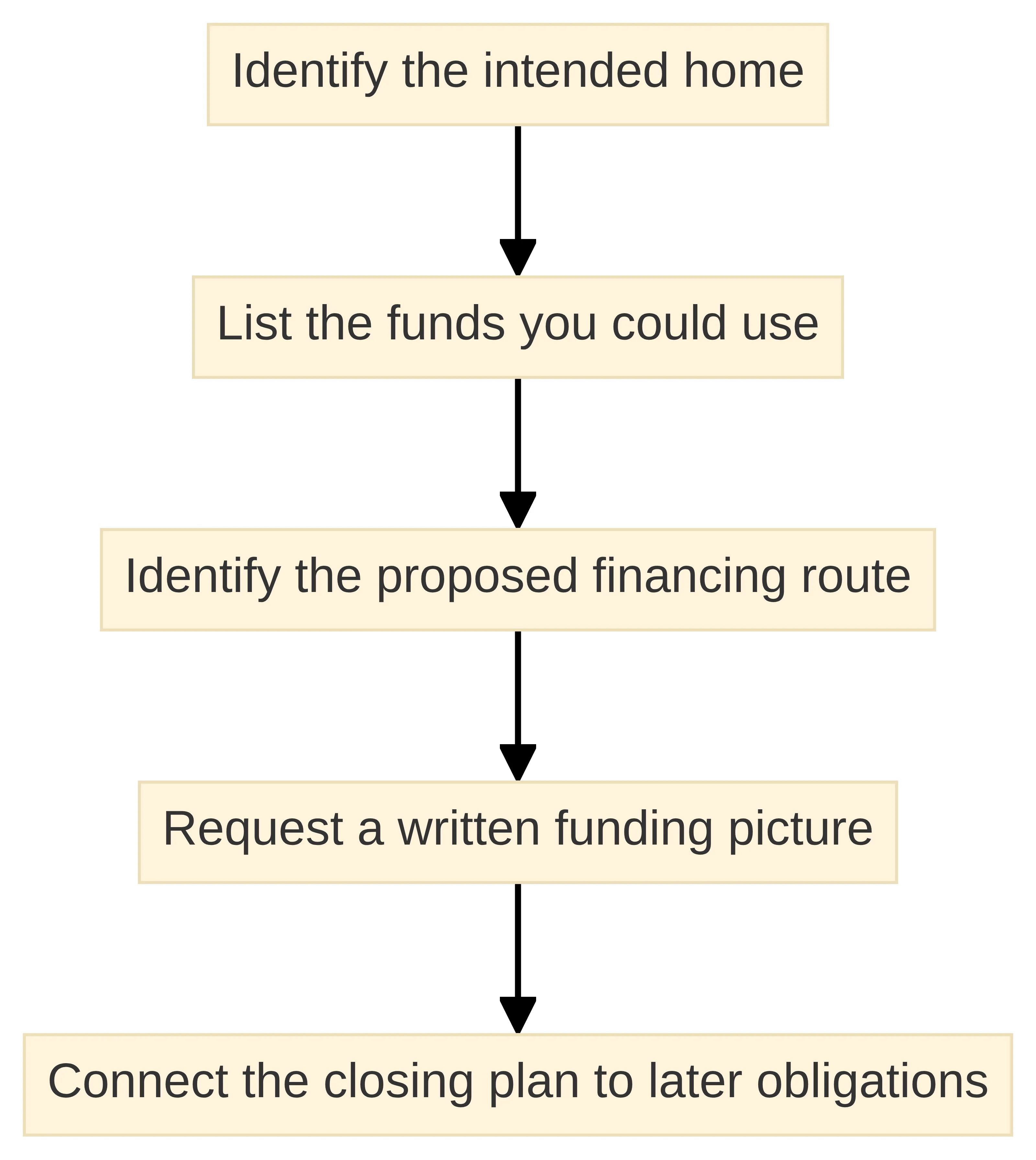
You can map the transaction without guessing at a personal loan amount. Write the plan in this order:
- Identify the intended home. Record the purchase price, the property type, the way you expect to use the home, and any facts that could affect the property review.
- List the funds you could use. Separate money intended for the purchase from money you may need for moving, reserves, repairs, taxes, insurance, or other household needs. Do not assume that every dollar available today should be committed to the closing.
- Identify the proposed financing route. Ask how an HECM for Purchase would fit with the cash you plan to contribute and what payment options are available under the specific program.
- Request a written funding picture. Ask for the proposed purchase funding, costs, required cash, and continuing obligations in terms you can compare with other routes.
- Connect the closing plan to later obligations. The plan should show what remains your responsibility after you own the home, including property taxes, homeowners insurance, principal-residence use, and keeping the home in good condition.
This sequence helps you see the purchase as a complete funding decision rather than as a single loan feature. It also creates a clean list of questions for the licensed professional who can review the actual home, documents, and program conditions.
Do not treat a general description of an HECM for Purchase as a closing statement. The exact cash contribution, costs, available proceeds, property conditions, and timing must be determined for the proposed transaction.
Separate the buyer’s cash question from the loan question
The buyer’s cash question is, “How much of my own money would this purchase require?” The loan question is, “What financing structure would cover the remaining part of the purchase, and what responsibilities would follow?” Keep those questions separate because answering one does not answer the other.
The purchase approach described by NRMLA involves financing part of the new home with a reverse mortgage. That means the purchase still has a cash component, but the source and amount of that contribution are not established by the general concept alone. Your available funds may also have several competing uses, such as household reserves, moving expenses, repairs, property charges, or other planned spending. Decide how those uses should be listed before treating your cash as a purchase contribution.
A useful cash worksheet can include:
- The proposed purchase price.
- Cash that could be available for the transaction.
- Cash you want to retain for household needs.
- Estimated costs shown separately from the purchase price.
- The amount that would need to be financed under each route.
- The ongoing payment or property obligations associated with each route.
The worksheet is a planning aid, not an estimate of approval or proceeds. It should help you ask whether the proposed cash contribution leaves enough flexibility for the responsibilities that continue after closing.
Ask the professional reviewing your situation to distinguish money required to complete the purchase from money you may choose to retain. Also ask which figures are known, which are estimates, and which depend on the home, program, lender, or borrower information. That distinction keeps a broad explanation from being mistaken for a personalized quote.
Compare the purchase routes without ranking them
A purchase decision becomes easier to discuss when each route is tested against the same questions: where the purchase funds come from, whether monthly principal-and-interest payments are required, what homeowner duties continue, and how the loan balance or available equity may change.
The comparison below keeps the routes distinct. It does not rank them.
| Purchase or funding route | Payment question | Equity and cost question | Questions to take forward |
|---|---|---|---|
| Cash purchase | What money would leave your assets at closing, and what would remain afterward? | How would committing cash affect the reserves you want to keep? | Which funds would be used, and which funds would stay available for household needs? |
| Conventional mortgage | The cited NRMLA comparison describes a conventional mortgage as requiring monthly principal-and-interest payments. | What payment, interest, and other costs would apply to the specific mortgage? | How would the required monthly payment fit the budget over time? |
| HECM for Purchase | The purchase approach finances part of a new home with a reverse mortgage; reverse mortgage borrowers generally make no required monthly principal-and-interest payments. | Interest and fees are added to the reverse mortgage balance each month, so the balance grows over time. | What cash contribution, costs, payment arrangement, and future balance would apply to this home? |
| Home equity loan or HELOC | The CFPB report states that traditional home equity loans and HELOCs require monthly payments. | Is this being considered for access to home equity rather than as the purchase route itself, and what payment would it require? |
The table is a framework for questions, not a substitute for terms on a specific transaction. The CFPB report also says reverse mortgages generally are easier to qualify for than home equity loans or HELOCs, which require adequate income and credit scores. That statement is attributed to the report and should not be turned into a prediction about your own qualification.
A comparison should show both the payment difference and the cost difference. It should also show what continues after closing. We prepare personalized comparisons instead of recommending the same solution for everyone, because the relevant facts differ from one purchase to another.
Keep ownership separate from the loan security
A reverse mortgage uses the home as security for the loan, while title remains in your name. That distinction applies to the ownership question and the loan question separately: you own the home, and the home secures the borrowing.
This distinction matters during an HECM for Purchase discussion because the transaction is about buying a home, not transferring ownership to the lender. Ask how title will be held, who will be shown as the owner, and how any co-owner or spouse will be treated under the specific transaction. Those questions require the actual ownership documents and program rules.
Ownership also does not remove the homeowner duties attached to the loan. The CFPB explains that reverse mortgage borrowers must pay property taxes and homeowners insurance, use the property as their principal residence, and keep the house in good condition. These responsibilities belong beside the ownership explanation, not in a separate footnote.
Use a simple two-column note when reviewing the purchase:
- What ownership means: Your title and the documents that establish who owns the home.
- What loan security means: The home secures the reverse mortgage, and the balance must be addressed when the loan becomes due.
Ask for any ownership, occupancy, and security-interest terms in plain language before you compare the purchase route with cash or another mortgage. The goal is to understand what you own, what secures the loan, and what you must continue doing as the homeowner.
Put ongoing homeowner duties beside payment flexibility
An HECM for Purchase may be considered partly because reverse mortgage borrowers generally make no required monthly principal-and-interest payments. That payment feature should never be read as no financial responsibilities. Interest and fees are added to the reverse mortgage balance each month, and homeowners remain responsible for property taxes, homeowners insurance, principal-residence use, and keeping the home in good condition.
Put the continuing duties on the same page as the payment structure:
- Property taxes: Ask how taxes must be paid and what happens if a required payment is missed.
- Homeowners insurance: Ask which insurance coverage is required and how renewals will be handled.
- Principal residence: Confirm how the occupancy requirement applies to your intended use of the home.
- Home condition: Ask what maintenance standard applies and how property condition will be reviewed.
- Loan balance: Track that interest and fees are added to the balance each month.
HUD guidance describes two HECM property-charge funding options for certain charges: a Life Expectancy Set-Aside, or authorization to pay real estate taxes and assessments, hazard insurance, and flood insurance from HECM monthly payments or a line of credit as those charges come due. The specific arrangement is not established by the general description of an HECM for Purchase, so ask which option, if any, applies to the proposed transaction.
Payment flexibility can change how you plan monthly cash flow, but it does not eliminate the need to budget for homeowner duties. Before you compare a reverse mortgage with a conventional mortgage, list the required monthly principal-and-interest payment under the conventional route beside the property charges and balance obligations under the HECM route.
The useful comparison is therefore broader than “payment” versus “no payment.” It is a comparison of the full set of obligations that follows each financing choice.
Verify the borrower, home, and occupancy record
An HECM for Purchase review should examine the borrower, the proposed home, and the plan to occupy it. The general product definition refers to eligible homeowners, while the CFPB identifies principal-residence use, property taxes, homeowners insurance, and home condition as continuing reverse-mortgage responsibilities. Those points give you subjects to verify, not an approval checklist.
Organize your questions under four headings:
Borrower and household
- Who would be the borrower or borrowers?
- How would age, ownership, marital status, or a non-borrowing spouse affect the proposed transaction?
- Which documents would be needed to evaluate the borrower and the household’s financial obligations?
Home and property
- Does the proposed property meet the applicable property requirements?
- What condition, insurance, association, or special-assessment questions must be answered?
- Which property documents should be gathered before requesting a personalized estimate?
Occupancy
- Will the home be used as your principal residence?
- When would you occupy it, and how would an extended absence be treated?
- What records would establish that the occupancy requirement is being met?
Funding and property charges
- What cash would be required at closing?
- How would property taxes and insurance be handled?
- Would any property-charge funding arrangement apply, and what conditions would accompany it?
The purpose of these questions is to identify facts that can change the analysis before you compare estimated proceeds or costs. Do not treat a general article, calculator result, or preliminary conversation as a determination that a particular borrower or home qualifies. The licensed professional handling the proposed transaction must review the applicable program and the actual documents.
Treat costs as part of the purchase-price decision
The purchase price is only one part of the funding decision. You also need to understand the costs of obtaining and maintaining the financing, the cash required at closing, the continuing property charges, and the way interest and fees affect the balance.
Request an itemized review rather than applying a universal cost figure to your proposed HECM for Purchase.
Ask for costs in categories that can be compared:
- Costs connected with obtaining the reverse mortgage.
- Costs connected with completing the home purchase.
- The cash contribution required from you.
- Property taxes, insurance, and other applicable property charges.
- Interest and fees added to the reverse mortgage balance over time.
- Costs that may apply if the loan later becomes due.
Do not combine all of those categories into one vague estimate. Ask which amount is paid at closing, which amount is financed, which amount continues after closing, and which amount depends on the property or program. Also ask whether a stated figure is an estimate, a maximum, or a confirmed charge for the proposed transaction.
Reverse mortgage counseling addresses the loan’s features and responsibilities, costs, financial and tax implications, and available alternatives. Bring the cost worksheet to counseling so you can compare the HECM for Purchase with cash, a conventional mortgage, and other home-equity choices using the same categories.
A cost discussion is complete only when it shows how the numbers affect both the purchase funding and the balance that remains after closing.
Show what happens to equity while the homeowner lives there
Home equity is the value left after the loan balance and other claims against the home are considered. An HECM for Purchase changes the equity discussion because the reverse mortgage balance can grow while you live in the home. The CFPB explains that interest and fees are added to the balance each month, so the balance grows over time.
The exact effect cannot be stated without the purchase price, loan terms, payment arrangement, interest, fees, home value, and time period. Do not treat a general illustration as a prediction about your home.
Ask the professional reviewing the transaction to show:
- The proposed starting loan balance.
- The charges added at closing or financed through the transaction.
- How interest and fees would be added over time.
- What the balance could look like under clearly labeled illustrations.
- Which assumptions drive each illustration.
- How the balance compares with the cash contribution and purchase funding.
The purpose of this exercise is not to forecast the home’s future value. It is to make the loan balance visible beside the payment flexibility. A plan that reduces required monthly principal-and-interest payments may also change how much equity remains available later, so both effects belong in the same discussion.
Use the words “balance growth” and “remaining equity” when you ask questions. They are more precise than describing the loan only as a way to buy the home.
Connect occupancy to the later repayment event
An HECM for Purchase should be evaluated with its later repayment event in view. For an FHA-insured HECM, the loan becomes due when the last borrower permanently leaves the home, sells the property, or passes away. This is an event that makes the loan due, not a scheduled deadline or a fixed loan term.
That rule connects the purchase decision to the occupancy plan. Ask how the proposed transaction treats:
- A permanent move to another residence.
- A sale of the home.
- A change in the borrower’s household or ownership situation.
- A period when the home is not being used as the principal residence.
- The process for determining the balance and addressing repayment when the loan becomes due.
The NRMLA guide states that resolving an occupancy default requires returning to the property within 12 months after it becomes vacant. Treat that as a specific guide statement, not as permission to leave the home whenever you choose or as a substitute for reviewing the documents for your transaction. Ask what occupancy records are required and when the servicer must be notified about a change.
This event-based explanation helps you avoid two opposite mistakes. The loan is not described as a deadline that arrives simply because time passes, and it is not described as an arrangement with no later repayment responsibility. The relevant event, the continuing occupancy requirement, the growing balance, and the repayment process all belong in the purchase discussion.
Ask for the later-event explanation in writing and include it in the same comparison as the purchase price, cash contribution, payment arrangement, property duties, costs, and remaining equity.
Use counseling to test the entire decision
Reverse mortgage counseling is designed to address more than the loan’s payment feature. Use that broad scope to test the complete HECM for Purchase decision rather than asking only how much could be financed.
Take these materials to the counseling discussion:
- The proposed home and purchase price.
- Your planned cash contribution and the funds you want to retain.
- The proposed financing structure.
- A list of property taxes, insurance, maintenance, and other known homeowner duties.
- The cost worksheet, with estimates separated from confirmed figures.
- Questions about balance growth, occupancy, and the later repayment event.
- The other routes you want to compare, including cash and a conventional mortgage.
Ask the counselor to explain each term before you rely on it. Ask which conclusion is general education and which conclusion depends on your documents. Also ask what financial, tax, or alternative-financing questions require help from another qualified professional.
Counseling is an information checkpoint. It does not replace the transaction-specific review by the professional handling the proposed loan, and it does not turn a preliminary estimate into an approval. Its value is that it gives you a separate place to examine the features, responsibilities, costs, implications, and alternatives together.
Prepare the questions before requesting an estimate
A personal estimate is more useful when you already know which facts and trade-offs you want explained. Bring a written question list so the conversation covers the purchase, not only the loan label.
Questions about the product
- Is the proposed financing an FHA-insured HECM for Purchase?
- How is this purchase-focused option different from a reverse mortgage used on a home you already own?
- Which payment options are available under the specific program?
- Which terms apply only to this program and this proposed home?
Questions about purchase funding
-
What is the proposed purchase price?
-
How much cash would be required from me at closing?
-
Which funds may be used for the purchase, and which funds should I consider retaining for household needs?
-
Which figures are estimates, and which are confirmed for the proposed transaction?
Questions about the borrower and home
- What borrower, ownership, and household facts affect the review?
- What property type, condition, insurance, association, or documentation requirements apply?
- How will principal-residence use be established?
- What happens if the occupancy plan changes?
- Which documents should be gathered before a personalized comparison is prepared?
Questions about continuing responsibilities
- How will property taxes and homeowners insurance be handled?
- Does a Life Expectancy Set-Aside or authorization to use HECM payments or a line of credit for certain property charges apply?
- What maintenance and property-condition responsibilities continue after closing?
- What must be done to keep the home as the principal residence?
Questions about costs and balance growth
- What costs are connected with the reverse mortgage and the purchase?
- Which costs are paid at closing, financed, or paid over time?
- How are interest and fees added to the balance?
- Can you show clearly labeled illustrations of balance growth using stated assumptions?
- How could the growing balance affect the equity remaining in the home?
Questions about comparison routes
- What would the cash-purchase route require from my assets?
- What monthly principal-and-interest payment would a conventional mortgage require?
- How would a home equity loan or HELOC differ in payment, cost, and risk?
- What information would be needed to compare the routes fairly rather than compare one feature in isolation?
Questions about counseling and repayment
- What will reverse mortgage counseling cover in this transaction?
- Which financial and tax questions should be directed to another qualified professional?
- What event would make the loan due?
- What process would address the balance when the loan becomes due?
The questions reflect the supported distinction between a reverse mortgage, a conventional mortgage, and home-equity borrowing. Reverse mortgage borrowers generally make no required monthly principal-and-interest payments, while traditional home equity loans and HELOCs require monthly payments. Reverse mortgages also have different costs and risks, including higher costs than home equity loans and HELOCs according to the CFPB report.
Use the list to ask for explanations, not to predict your own result. A professional must review the borrower, home, program, documents, and applicable conditions before giving a transaction-specific conclusion.
A personal comparison is the appropriate next step
An HECM for Purchase is worth investigating when you are prepared to compare the intended home, your available cash, the proposed reverse-mortgage funding, continuing homeowner duties, costs, balance growth, occupancy plan, and later repayment event as one decision. The general concept can explain the path, but it cannot establish your eligibility, required contribution, available proceeds, or individual suitability.
I provide clear, unbiased education to help families understand reverse mortgage options. Bring the questions from this guide to that discussion, along with the home and funding information you want reviewed.
A qualified professional must determine individual suitability for your circumstances. The next conversation should leave you with a clearer funding map, a complete list of continuing responsibilities, and specific questions about the proposed home.
What should I verify before exploring an HECM for Purchase?
What responsibilities do borrowers have with an HECM for Purchase?
Borrowers are responsible for paying property taxes and homeowners insurance, using the property as their principal residence, and maintaining the home in good condition.
How does an HECM for Purchase affect home equity?
The balance of the reverse mortgage grows over time as interest and fees are added, which can reduce the equity remaining in the home compared to a plan that requires monthly payments.
What questions should I ask a professional before pursuing an HECM for Purchase?
Prepare questions about the proposed purchase price, required cash contribution, financing structure, property requirements, ongoing responsibilities, costs, and how the loan balance will be managed.
What are the key factors to verify when considering an HECM for Purchase?
Key factors include the borrower’s eligibility, the proposed property’s compliance with requirements, the intended occupancy plan, and the financial obligations associated with the loan.
What is the process for obtaining an HECM for Purchase?
The process involves identifying the intended home, determining available funds, understanding the financing route, and discussing the responsibilities and costs with a licensed professional.
What should I know about the repayment of an HECM for Purchase?
The loan becomes due when the last borrower permanently leaves the home, sells the property, or passes away, and this event must be considered when planning for future occupancy and financial obligations.
Have questions about this?
Talk to a Certified Reverse Mortgage Professional — directly.
When you call, you reach me — not a call center. Free 30-minute consult by phone, video, or in person. No SSN, no credit pull, no obligation.
Schedule a consult